
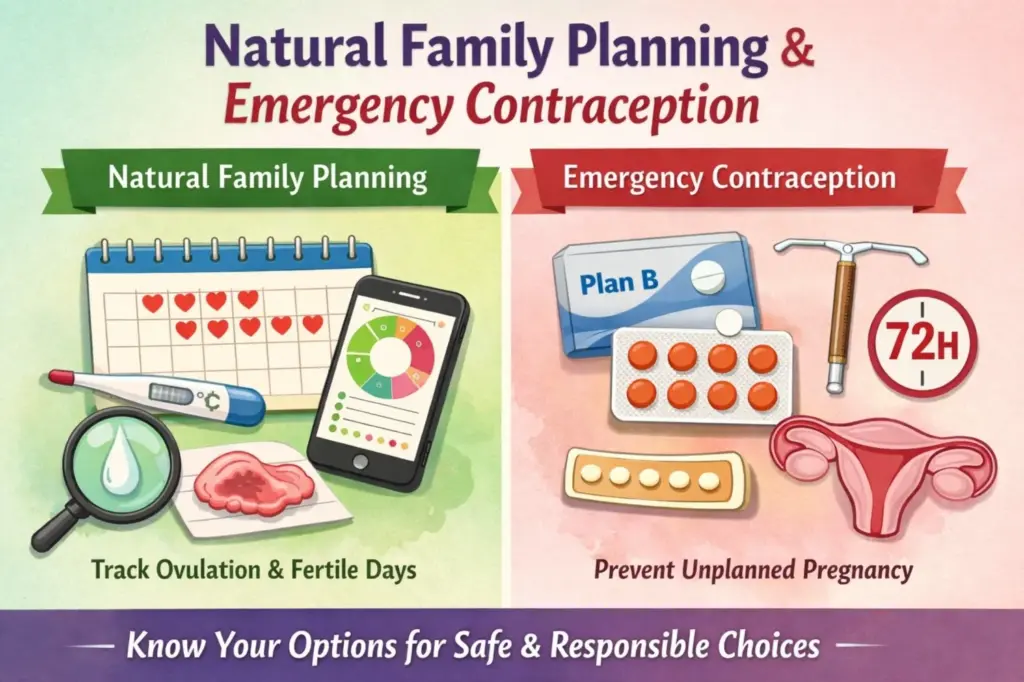
Planning a family is one of the crucial decisions in life. New blood tests can tell men whether there is a risk of his being infertile, while both sexes can find out about her cycle. However, most couples are bewildered when they hear terms such as Natural Family Planning, fertility awareness and emergency contraception. Concerns often arise about safety, effectiveness and timing.
And that’s precisely why Family Planning becomes important. It empowers couples to control when they have children, safeguards reproductive health and enables clear decisions regarding parenthood.
Dr Krishna Meena,Best Gynaecologist Indore said many couples today prefer safe and natural ways to plan pregnancy. They also want to learn what to do if they have unprotected intercourse or other unforeseen circumstances.
So this guide explains simple, practical terms about both natural family planning methods and emergency contraception. It also has professional insights of Dr Krishna Meena an accepted Infertility Specialist In Indore and as well as a registered Women Specialist in Indore who frequently assist partners with reproductive health choices.
What Is Family Planning?
Family Planning means determining when to have a baby and how many babies. Using medical or natural methods, couples practice fertility control to prevent unintended pregnancy.
These methods typically fall into three groups:
- Natural family planning methods
- Hormonal contraception
- Emergency contraception
Continued However, many couples prefer natural fertility awareness techniques as they do not involve any medications or devices.
Why Family Planning Matters
Benefits of Family PlanningFamily planning has many key benefits:
- Helps couples plan pregnancies responsibly
- Improves maternal and child health
- Prevents unintended pregnancies
- Allows spacing between children
- Decreases the health risks in pregnancies that are prone to problems
Dr. Krishna Meena, a Women Specialist practicing in Indore says that whatever couples understand the importance of Family Planning in advance enjoy much better reproductive outcomes and pregnancy along with healthy babies.
Understanding Natural Family Planning
Natural Family Planning (NFP) is focused around tracking the signs of fertility during your cycle to know when you are most likely to get pregnant.
Rather than relying on hormonal contraception, couples record changes in their bodies to track fertile and infertile days.
Common Natural Family Planning Methods
1. Calendar Method
This method tracks menstrual cycles, several over a few months, and predicts ovulation.
Women track cycle patterns to determine their fertile window.
2. Basal Body Temperature Method
Ovulation generates a slight rise in body temperature.
Steps include:
- Measure temperature every morning.
- Record results daily.
- Identify patterns after ovulation.
It is most accurate when combined with other fertility signs.
3. Cervical Mucus Method
Hormonal changes affect cervical mucus.
Typical signs include:
- Clear, stretchy mucus during ovulation
- Non-fertile days, high viscosity or thick mucus
Tracking these changes helps pinpoint fertile days.
4. Symptothermal Method
This method combines:
- Basal body temperature
- Cervical mucus
- Ovulation symptoms
When multiple indicators are used, its gives better accuracy.
Benefits Of Natural Family Planning
Many couples prefer natural methods. Natural methods don’t involve medications or devices and support overall reproductive awareness.
Key Benefits
- No hormones or medications
- No medical side effects
- Improves understanding of menstrual cycles
- Encourages partner communication
- Supports religious or personal beliefs
Further, checking fertility signs also helps a woman to early diagnose ovulation problems and hormonal imbalance says Dr Krishna Meena, one of the best Infertility Specialist in Indore.
This knowledge may be helpful to couples who are trying for a pregnancy.
What Is Emergency Contraception?
Even with meticulous preparations, you occasionally encounter unforeseen circumstances.
For example:
- Condom breakage
- Missed contraceptive pills
- Unprotected intercourse
In those situations, you can prevent pregnancy through emergency contraception.
Emergency contraception delays ovulation or prevents fertilization.
But given it can only be used for a limited period.
Types of Emergency Contraception
1. Emergency Contraceptive Pills
These most effective when taken within 72 hours post unprotected intercourse.
But some will only work up to 120 hours.
2. Copper Intrauterine Device (IUD)
A doctor can place a copper IUD (intrauterine device) up to 5 days after intercourse.
This option offers:
- Immediate emergency protection
- Long-term contraception
Emergency contraception is often mistakenly perceived by women to be unsafe, according to Dr Krishna Meena, one of the best Gynaecologist in Indore. Truthfully, unless misused or overused, it is still a safe option.
Family Planning Practice Guide, Step-By-Step
Any couple can make use of these steps in managing Family Planning.
Step 1: Track Menstrual Cycles
Start by recording:
- Cycle length
- Ovulation symptoms
- Period dates
Keeping an accurate record helps (tracking apps or journals can assist with this).
Step 2: Identify Fertile Window
If you have a 28-day cycle, most women ovulate around day 14.
However, cycles vary. So, monitoring various fertility signs helps increase precision.
Step 3: Have Protected Sex on the Fertile Days
If avoiding pregnancy, couples should:
- Abstain during fertile days
- Use barrier methods like condoms
Step 4: Seek Medical Guidance
If your cycles are irregular or you have trouble tracking your fertility, see a specialist.
Couples are advised to do the same in combination with your doctor guidance if you consult Indore well known Women Specialist Dr Krishna Meena
Tools That Assist with Family Planning
In the age of modern technology, tracking fertility has become much simpler.
Helpful Tools
- Fertility tracking mobile apps
- Ovulation predictor kits
- Basal body temperature thermometers
- Menstrual cycle calendars
These tools provide better accuracy and insight into reproductive health for couples.
While visiting Dr Krishna Meena (Infertility Specialist in Indore), many couples discuss these tools at the time of pregnancy planning.
Couples Neutralize These Common Family Planning Mistakes
Mistakes can render Family Planning methods ineffectual, however.
Common Errors
1. Inconsistent cycle tracking
This daily tracking is crucial, without it the algorithm has no clue what’s going on.
2. Ignoring ovulation signs
Most women just know that they are on a cycle, but without physically studying their bodies.
3. Misusing emergency contraception
Emergency pills are not a substitute for regular contraception.
4. Delaying medical advice
Irregular cycles are often a signal of health problems underneath.
5. Relying on myths rather than medical guidance
Hence following expert doctors like Dr Krishna Meena, Best Gynaecologist in Indore helps to take safe and enlightened decisions.
Who Should Use Natural Family Planning?
Natural methods are least effective for:
- Couples avoiding hormonal contraception
- Women with regular menstrual cycles
- Couples comfortable tracking fertility signs
- Those planning pregnancy soon
Women with irregular cycles, hormonal disorders or infertility concerns should consult a specialist, however.
Adept in Reproductive Health, Dr Krishna Meena commonly assesses the patient’s reproductive health before determining particular Family Planning tactics.
When To Talk to a Doctor
Couples should check with a gynecologist if they suffer from:
- Irregular menstrual cycles
- Severe menstrual pain
- Difficulty identifying ovulation
- Repeated contraceptive failures
- Difficulty conceiving after one year
A professional assessment can identify hormonal issues, PCOS or fertility problems earlier.
Must Know Tips for Safe Family Planning
According to Dr Krishna Meena, the best Women Specialist in Indore, here are some expert tips:
- Monitor cycles reliably for a minimum of 3 months
- Fertility tracking apps should give you precise dates
- Combine multiple natural methods
- Do not use emergency contraception as a regular method
- You must stay healthy to promote hormonal balance.
Medical consultation always comes first for reproductive health.
Importance of Informed Family Planning Decisions
Family Planning is so much more than Pregnancy Prevention It is essential to overall reproductive health, and allowing couples to make informed decisions for their future. Tracking fertility signs, periods and researching about contraception options leads couples towards more reproductive agency.
Informed couples tend to experience fewer health complications and feel better-prepared when it comes to planning for a pregnancy, says Dr Krishna Meena, best gynaecologist in indore. It can also help identify early on any hormonal imbalances or fertility issues with the assistance of an expert Infertility Specialist in Indore and one of the best Women Specialist in Indore. This way, couples will be able to choose more appropriate Family Planning method for themselves while preserving the long-term reproductive health and ensuring safer outcomes of pregnancy.
Conclusion: Making Informed Family Planning Decisions.
Family planning helps to understand reproductive health & enables the couple to be masters of their aReproductive Health. Methods that help determine fertile days include natural fertility awareness methods, while emergency contraception is used as a backup when it’s necessary to use protection.
But every couple’s circumstances are different. Hence why medical guidance creates safe and effective options.
For tailored advice related to fertility, contraception or planning a pregnancy ask Dr Krishna Meena the best gynaecologist in indore the esteemed infertility specialist in indore or women specialist in indore.
You can get the right advice to safely choose a Family Planning method that works best with your lifestyle and health goals.
FAQs About Family Planning
1. Which Family Planning techniques are the safest?
The safest option varies depending on your health conditions. Effectiveness rates vary among natural methods, hormonal contraception and barrier methods.
2. Natural Family Planning — Myths and Truths: Can it help avoid pregnancy?
The drawback to natural methods is they work well if you track your cycle accurately, and are disciplined.
3. How soon do emergency contraception needs to be taken?
Emergency contraceptives should ideally be taken within 72 hours following unprotected intercouse.
4. Learn how emergency contraception may affect future fertility.
No. Emergency contraception does not create long-term fertility issues when used occasionally.
5. When should a couple see a fertility specialist?
Women should consider seeing a doctor if they can’t get pregnant after 12 months of regular unprotected intercourse.