
Postpartum Care: Essential Recovery Tips for New Mothers
You know, postpartum care is super important, but it often flies under the radar when we talk about a woman’s health journey. We hear so much about pregnancy and delivery, but what about after that? Proper postpartum care is key — it helps with physical recovery, supports emotional well-being, balances hormones, and protects long-term reproductive health.
At the Mother Care Clinic, Dr. Krishna Meena, who’s a well-respected gynecologist in Indore (she’s got an MBBS, an MD, and even a Fellowship in Reproductive Endocrinology), is all about structured postpartum care. It’s really designed to help new moms bounce back safely and with confidence. So whether you had a regular delivery, went through laparoscopic surgery, or had a C-section, just know that postpartum care is crucial for your healing and can help avoid complications down the line.
Why Postpartum Care Is So Important
After having a baby, a woman’s body goes through a ton of changes—hormonal, physical, and emotional. It’s pretty intense, to be honest. That’s why taking care of yourself after childbirth is so crucial. Good Postpartum Care can really make a difference in several ways:
– It helps heal the uterus and the birth canal, which is super important.
– It gets those hormones back in balance.
– If you’re planning to breastfeed, it offers the support you need.
– It plays a key role in preventing infections.
– Plus, it helps keep an eye on when your menstrual cycle comes back.
– And, it can help spot any early breast health issues.
Now, if proper care isn’t taken during this time, women might face some serious complications. We’re talking about things like heavy bleeding, infections, delayed returns of the menstrual cycle, or even long-term pelvic problems. It’s really something to think about, right?
Physical Recovery: The Foundation of Postpartum Care
In the first six weeks after giving birth, it’s all about taking care of your body and letting it heal.
1. Uterine Recovery
So, your uterus will start shrinking back to its usual size. You might feel some mild cramps—that’s pretty normal. But, if you notice heavy bleeding or if the pain feels really intense, don’t wait; get in touch with your doctor right away.
2. Wound Healing
Now, if you had stitches, a C-section, or any kind of surgery, keeping things clean is super important. And make sure to go to those follow-up appointments. They’re a key part of your postpartum care.
3. Rest and Nutrition
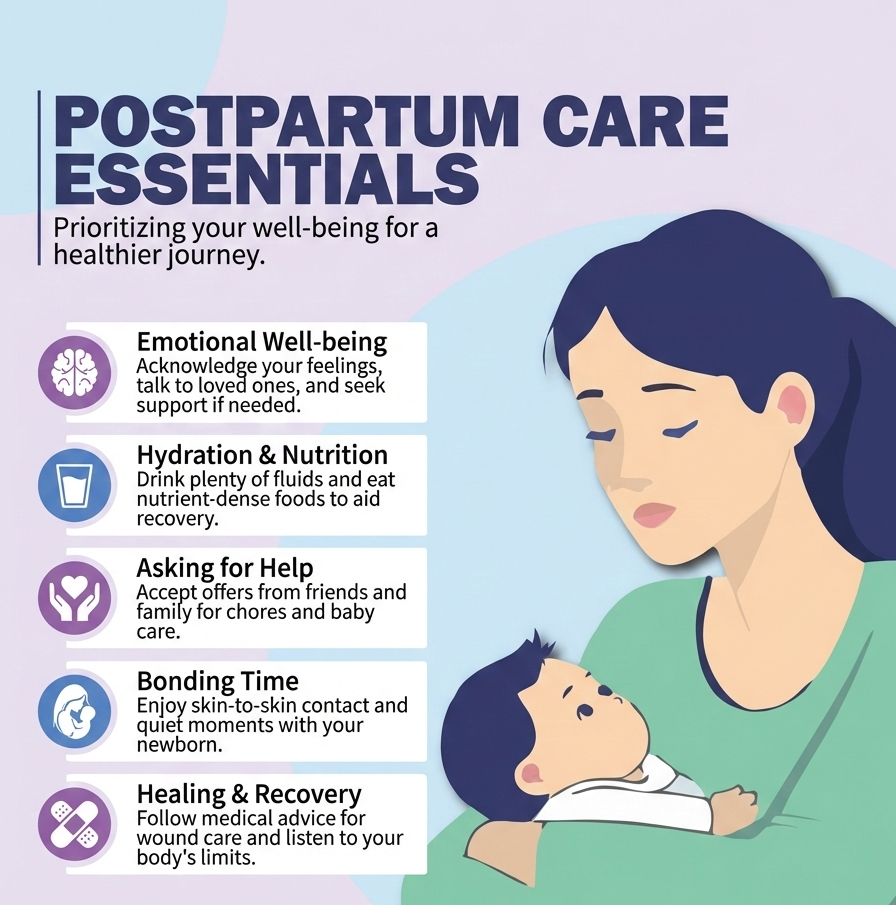
Eating well is crucial! Foods high in iron, plenty of protein, and staying hydrated can really help speed up your recovery. Plus, good nutrition is great for breastfeeding and helps keep your hormones in check. You know, it’s all connected!
Breast Health & Postpartum Care
After giving birth, it’s pretty normal to experience things like breast tenderness, engorgement, and even some milk leakage. But, you know, it’s super important to keep an eye on a few things as part of your Postpartum Care. Here’s what to watch for:
– Any lumps in the breast
– Redness or pain, which could be a sign of mastitis
– Cracks on the nipples
– Any unusual discharge
If you find a lump that doesn’t go away, it might be a good idea to get it checked out, and hey, a breast cancer screening could be recommended too. Sometimes, hormonal changes can make your breasts feel funny, so getting advice from a professional can really help put your mind at ease.
Being aware of your breast health is a key part of taking care of yourself after having a baby. It’s all about ensuring you’re feeling your best during this new chapter!
Emotional Well-being in Postpartum Care
You know, it’s totally normal to experience mood swings after having a baby—those hormones can really throw you for a loop! But if you’re feeling really sad, anxious, or if it feels like you just can’t connect with your little one, that might be a sign of postpartum depression, which is a bit more serious.
That’s where compassionate postpartum care comes into play. It’s all about offering emotional support and counseling to help new moms navigate these tough feelings. Honestly, reaching out for help sooner rather than later is so important; it can make a big difference for both you and your baby. So, don’t hesitate to seek that support when you need it!
Menstrual Health After Delivery
You know, a lot of women really wonder when their periods will come back after having a baby. It can take quite a while sometimes, even weeks or months especially if they’re breastfeeding.
And if someone is experiencing heavy bleeding, irregular cycles, or really bad pain, it might be time to think about treatment for menstrual disorders as part of postpartum care.
Plus, let’s not forget about the young moms out there, especially teenage girls. They really need a bit more help figuring out how to balance their hormones and avoid any long-term issues with their cycles. It’s a lot to navigate, for sure!
Family Planning & Infertility Treatment After Delivery
You know, some women find it tough to get pregnant again because of hormonal issues or other complications. It can be a real struggle, and sometimes they might need infertility treatments down the line.
When it comes to structured postpartum care, there’s quite a bit to cover. For instance, it’s important to talk about:
– Safe contraception options
– How to space out births
– Managing hormones
– Ways to preserve fertility
Getting the right recovery is crucial. It can really help improve the chances of a healthy pregnancy later on and cut down on complications. So, yeah, it’s all interconnected, isn’t it?
Advanced Care: When Procedures May Be Needed
Sometimes, complications can pop up, like retained tissue or abnormal bleeding, and in those situations, a hysteroscopy might be necessary. It’s actually a pretty neat, minimally invasive procedure that lets doctors diagnose and treat uterine issues without too much fuss.
Now, if a woman has had laparoscopic surgery for reproductive problems in the past, she really needs to pay attention to her postpartum care. It’s crucial for a smooth recovery, you know?
And let’s not forget – getting checked out early on can help avoid some serious complications down the road. Just a little heads up!
Prenatal Care & Its Link to Postpartum Care
You know, good prenatal care really makes a difference when it comes to how things go after the baby arrives. Women who get regular check-ups and support during their pregnancy tend to face fewer issues during delivery and the recovery period.
That’s why having consistent care — from those early prenatal visits all the way through postpartum care — is so crucial for women’s health in the long run. It’s all connected, really.
Warning Signs That Require Immediate Postpartum Care Consultation
If you find yourself dealing with any of the following, don’t hesitate — reach out for medical help right away:
– Heavy bleeding that has you changing pads every hour
– A high fever that won’t quit
– Intense abdominal pain that just won’t let up
– Discharge that smells off
– A lump in your breast that’s sticking around
– Sudden shifts in your mood
Getting timely postpartum care is so important. It really helps lower health risks and makes sure you have a smoother recovery, you know?
Postpartum Care for Teenage Mothers
You know, it’s pretty common for young moms to feel a bit shy about talking about things like menstrual irregularities or discomfort in their breasts. But here’s the thing—getting good Postpartum Care early on can really make a difference. It can help steer clear of:
– Ongoing menstrual issues
– Hormonal imbalances
– Troubles with fertility
– Emotional struggles
When young mothers get the right education and support, it really helps them focus on their health. It’s all about feeling empowered and taking charge, right?
Long-Term Benefits of Proper Postpartum Care
You know, when you really take care of yourself after giving birth, postpartum care can do wonders. It helps in so many ways, like getting those hormones back in check. And let’s not forget about reproductive health—it’s crucial for the future.
Also, a good postpartum routine can actually help prevent infertility down the line. How awesome is that? Plus, it can help regulate menstrual cycles, which can be a real game-changer. And, of course, we can’t overlook breast health. That’s just as important.
Oh, and there’s the emotional side of things too. Strengthening emotional resilience during this time is key. Women who stick to a structured postpartum care plan often find themselves feeling better overall and face a lower risk of those pesky chronic gynaecological issues. It really makes a difference, doesn’t it?
Final Thoughts
Motherhood? It’s truly a beautiful journey. But let’s not forget — recovery is just as crucial. Honestly, postpartum care isn’t just some extra perk; it’s something every new mom needs. Think about it: from healing physically and getting your menstrual cycle back on track to dealing with emotional ups and downs and keeping an eye on breast health, solid postpartum care plays a big role in safeguarding a woman’s long-term reproductive health.
So, whether you’re a brand-new mom, a mom-to-be gearing up for delivery, or even someone who’s had issues with their menstrual cycle or fertility in the past, having access to expert postpartum care is key. It helps ensure your body gets the chance to heal properly and thoroughly.
Making postpartum care a priority now? Well, that’s a smart move for your health now and for the years ahead.