
Introduction
Been suffering from extra-heavy periods, constant pelvic discomfort, or bizarre bloating? You would not be alone if that is so. These symptoms are experienced daily by millions of women in the world, for many cases it is a consequence of uterine fibroids. Sadly, this disorder is misdiagnosed, undiagnosed or dismissed entirely until it seriously affects a woman’s day everyday life.
Best gynecologist in Indore Dr Krishna Meena is a trusted infertility specialist in Indore and has guided hundreds of women through reading fibroid challenges to diagnosis, treatment and cure. In this long overdue, ungagged guide on Uterine Fibroids she reveals everything you always wanted to know about uterine fibroids —so what causes them, what the warning signs are and the modern treatment options currently available.
If you are new to your fibroids symptoms or have had them under control for many years, this article will enable you to make better-informed healthcare choices. So, let’s dive in.
What Are Uterine Fibroids? Understanding the Basics
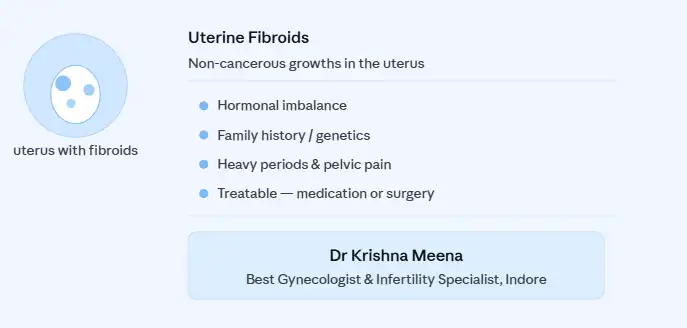
Uterine fibroids, medically termed as leiomyomas or myomas, are non-cancerous tumors that develop from the muscular tissue of the uterus. They can vary tremendously in size – as small as a pea up to the size of melon. In addition to this, a woman may have also one fibroid or many fibroids at once.
As per top women experts from Indore, fibroids are the most common non-cancerous tumors that develop in a woman during her reproductive age. Although it may be asymptomatic for some women with fibroids, still others can suffer life-altering complications that feel very limiting in terms of fertility, function and emotional health.
Types of Uterine Fibroids
Fibroids are generally classified into four main types, depending on their position inside the uterus:
- Intramural fibroids: The most common type, which develops in the muscular uterine wall and usually causes heavy bleeding and pressure symptoms.
- Submucosal fibroids: In the muscular layer of the uterus, they can cause immense pelvic discomfort yet be nearly asymptomatic in other ways. Submucosal fibroids: Just below the uterine lining and closely tied to menstrual-heavy bleeding and fertility issues.
- Subserosal fibroids: These grow on the outside of the uterus and can become large enough to interfere with the bladder or rectum.
- Pedunculated fibroids: These are attached to the uterus by a thin stalk, and may twist to cause acute, sharp pelvic pain.
What Causes Uterine Fibroids? Key Risk Factors Explained
Medical research and clinical expertise from specialists like Dr. Krishna Meena indicate to several well-established contributing variables, even if the precise etiology of uterine fibroids is still being investigated. The first crucial step in prevention and treatment is comprehending these risk variables.
1. Hormonal Imbalance
The growth of uterine fibroids is directly stimulated by progesterone and estrogen. As a result, fibroids typically enlarge during pregnancy and contract following menopause. Particularly vulnerable are women who have estrogen dominance, or an abnormally high level of estrogen compared to progesterone.
2. Genetic Predisposition
Your own risk is much increased if your mother, sister, or aunt has had uterine fibroids. Fibroid tissue commonly contains genetic mutations in the MED12 gene, indicating that genetic factors are important in their formation.
3. Lifestyle and Dietary Factors
The following lifestyle choices significantly raise the risk of fibroids:
- Being overweight or obese
- A diet low in green vegetables and heavy in red meat
- Vitamin D insufficiency is very prevalent among Indian women.
- Chronic stress and excessive alcohol intake
4. Ethnic and Demographic Factors
Fibroids are more prevalent and more severe among women of South Asian and African heritage, according to numerous studies. Women who have never been pregnant or who started menstruation before the age of twelve are also more likely to develop fibroids.
Recognizing the Symptoms of Uterine Fibroids
The fact that many women with uterine fibroids experience no symptoms at all for years is one of the most challenging elements of the condition. When symptoms do manifest, they can be anything from slightly inconvenient to seriously disruptive to daily life. Dr. Krishna Meena, a renowned women’s expert in Indore, advises ladies not to ignore these red flags:
- Menstrual bleeding that is heavy or prolonged: Using tampons or pads every hour is a serious warning sign.
- A persistent sense of fullness, heaviness, or cramping in the lower abdomen is known as pelvic pain or pressure.
- Frequent urination: Urgency or incontinence may result from large fibroids pressing on the bladder.
- Constipation or bloating: Normal digestion is disrupted by fibroids pressing on the rectum.
- When fibroids are situated close to the cervix or lower uterine segment, pain during sexual activity is frequently experienced.
- Infertility: In particular, submucosal fibroids obstruct sperm motility and embryo implantation.
How Are Uterine Fibroids Diagnosed?
Before deciding on a course of treatment, an accurate diagnosis is crucial. Dr. Krishna Meena, the top gynecologist in Indore, employs a comprehensive, multi-step diagnostic process.
Step-by-Step Diagnostic Process
- Comprehensive medical history: Knowing the patient’s symptoms, family history, and menstrual cycle.
- Pelvic examination: An oversized or abnormally shaped uterus is frequently found during a physical examination.
- The gold-standard imaging test to verify the size, quantity, and precise location of fibroids is pelvic ultrasonography (USG).
- When there are several fibroids or surgical planning is necessary, an MRI scan is advised for thorough mapping.
- A minimally invasive technique to see inside the uterus directly is called a hysteroscopy.
- Blood tests: To rule out thyroid or hormonal issues and to look for anemia brought on by persistent blood loss.
Uterine Fibroids Treatment Options Available in Indore
The intensity of the symptoms, the size and location of the fibroid, the patient’s age, and her desire to become pregnant in the future all influence the course of treatment. A highly skilled infertility specialist in Indore, Dr. Krishna Meena creates individualized treatment programs for each patient.
1. Watchful Waiting
Active monitoring with routine ultrasounds is frequently the safest initial course of action for women with tiny, asymptomatic fibroids, particularly those who are close to menopause.
2. Medication and Hormonal Therapy
- GnRH agonists: By creating a low-estrogen state, they temporarily reduce fibroids. frequently used before to surgery.
- Tranexamic acid: This medication lessens excessive menstrual bleeding without compromising fertility.
- Oral contraceptives and hormonal IUDs are useful for controlling pain and bleeding symptoms.
- NSAIDs: Lessen menstrual pain.
3. Myomectomy – Uterus-Preserving Surgery
For women who still want to become pregnant, a myomectomy—the surgical removal of fibroids while keeping the uterus intact—is the best choice. In comparison to open surgery, Dr. Krishna Meena’s laparoscopic and hysteroscopic myomectomy procedures greatly shorten recovery times.
4. Hysterectomy – Permanent Solution
For women with significant symptoms who have finished their family, hysterectomy is advised as a permanent treatment for uterine fibroids. As the top gynecologist in Indore, Dr. Krishna Meena frequently performs minimally invasive laparoscopic hysterectomy.
5. Uterine Artery Embolization (UAE)
UAE is a minimally invasive process that causes the fibroids to shrink by cutting off their blood supply. It is not advised for ladies who intend to become pregnant in the future.
6. Focused Ultrasound Surgery (FUS)
A new non-invasive method that eliminates fibroid tissue without making any incisions by using high-intensity ultrasound pulses.
Benefits of Seeking Early Treatment for Uterine Fibroids
Many women put off getting medical attention because they are afraid. Nonetheless, seeing a gynecologist as soon as possible has many advantages:
- Prevents severe anemia: Before excessive blood loss becomes harmful, it can be stopped with early care.
- Protects fertility: Women who receive early treatment for fibroids have a far higher probability of becoming pregnant spontaneously or through IVF.
- Lowers surgical risk: Early detection of smaller fibroids makes removal much simpler and safer.
- Enhances quality of life: When pelvic pain, excessive bleeding, and mental strain are effectively managed.
- Prevents progression: Monitoring makes sure that disorders like endometriosis are not overlooked at the same time.
Uterine Fibroids and Fertility: What Every Woman Should Know
Whether uterine fibroids may interfere with a woman’s ability to conceive is one of the most prevalent worries among women of reproductive age. The answer primarily depends on the size and location of the fibroid, as Dr. Krishna Meena, a highly sought-after infertility specialist in Indore, consistently states.
The most common cause of infertility, repeated losses, or unsuccessful IVF implantation is submucosal fibroids that deform the uterine cavity. Before making any decisions, a customized assessment by a qualified women specialist in Indore is crucial.
Important thoughts from Dr. Krishna Meena regarding fertility:
- Without previous fibroid excision, the success percentage of IVF for women with submucosal fibroids is much lower.
- For women with fibroids that impact fertility, myomectomy can significantly increase natural conception rates.
- It is completely feasible to become pregnant following a myomectomy, though depending on the complexity of the procedure, a C-section might be advised.
Common Mistakes Women Make When Dealing With Uterine Fibroids
Through years of clinical experience, Dr Krishna Meena has identified several recurring mistakes that delay effective treatment:
- Ignoring heavy periods: Many women mistakenly believe that excessively painful and heavy periods are “normal.” They’re not.
- Self-medicating without a diagnosis: Taking painkillers without a doctor’s advice hides symptoms as fibroids spread.
- Postponing fertility consultation: Women who have infertility frequently are unaware that fibroids are the reason. Years of despair can be avoided with an early diagnosis by an infertility specialist in Indore.
- Assuming surgery is the only option: There are numerous safe and efficient non-surgical solutions available in modern medicine.
- Not seeking a second opinion: The top gynecologist in Indore should always be consulted for a comprehensive assessment when a complicated fibroid is discovered.
Step-by-Step Guide: What to Do If You Suspect Uterine Fibroids
- Monitor your symptoms: For at least two cycles, keep a menstruation journal in which you record the length of each period, blood flow, clot size, and degree of discomfort.
- Make an appointment: Don’t hesitate to make an appointment with a reputable women’s specialist in Indore.
- Perform prescribed testing: Comply with your doctor’s recommendations for the pelvic ultrasound, blood tests, and any other investigations.
- Talk about every possible course of treatment: Inquire with your gynecologist about the effects on fertility, recovery periods, success rates, and surgical and medical treatments.
- Make a commitment to follow-up care: Consistent follow-up ultrasounds guarantee that your condition stays under control.
- Make supportive lifestyle adjustments, such as eating a diet low in red meat and alcohol, exercising frequently, and practicing yoga or meditation to alleviate stress.
Why Choose Dr Krishna Meena for Uterine Fibroid Treatment in Indore?
Choosing the right doctor makes all the difference in reproductive health. Dr Krishna Meena stands out as the best gynecologist in Indore for several compelling reasons:
- Years of specialized practice in obstetrics, gynecology, and reproductive medicine provide a wealth of clinical experience.
- Complete women’s health care: As a committed women’s expert in Indore, I offer a wide range of services, from simple check-ups to intricate fibroid procedures.
- Expertise in minimally invasive surgery: Focuses on laparoscopic myomectomy and hysterectomy for quicker recovery and less pain.
- Fertility-focused approach: Before suggesting any treatment, she thoroughly assesses the impact of fibroids on reproduction as a caring infertility specialist in Indore.
- Patient-centered care is characterized by compassionate communication, taking the time to fully involve patients in their treatment decisions, and explaining diagnosis.
Practical Lifestyle Tips to Manage and Reduce Fibroid Risk
- To combat anemia, eat a diet high in iron, such as spinach, lentils, and fortified cereals.
- Increase vitamin D levels: Research indicates a direct correlation between fibroid growth and vitamin D insufficiency.
- Keep your weight within a healthy range: Fibroid growth is directly fueled by extra estrogen produced by excess fat tissue.
- Reduce your intake of processed foods and soy because they both add to the dominance of estrogen.
- Manage your stress: Hormonal equilibrium is greatly aided by yoga, meditation, and enough sleep.
Frequently Asked Questions About Uterine Fibroids
Q1. Can fibroids in the uterus develop into cancer?
Rarely do uterine fibroids develop into cancer; they are nearly invariably benign. Leiomyosarcoma, the malignant form, is incredibly uncommon. However, in order to rule out unusual features, any fast growing fibroid should be evaluated right away by the top gynecologist in Indore.
Q2. Can I become pregnant following surgery to remove fibroids?
Pregnancy following a myomectomy is both feasible and quite common. When removing fibroids, Dr. Krishna Meena, a skilled infertility specialist in Indore, meticulously protects the uterus. After surgery, the majority of women wait three to six months before trying to conceive and go on to have safe pregnancies.
Q3. How can I determine whether uterine fibroids are the cause of my heavy periods?
See a women’s specialist in Indore right away if you are passing big clots, soaking through a pad or tampon in less than two hours, or having periods that last more than seven days. Fibroids can be swiftly confirmed or ruled out with a basic pelvic ultrasound.
Q4. Do Indian women frequently have uterine fibroids?
Indeed, uterine fibroids are very common among Indian women, but they are greatly underreported because of social stigma and ignorance. According to studies, up to 25–50% of Indian women of reproductive age have fibroids, and many of them go years without receiving a diagnosis.
Q5. How much does fibroid treatment cost in Indore?
The type of treatment selected determines the cost. While the cost of laparoscopic surgery varies according to hospital capabilities and procedure complexity, medication management is very inexpensive. In addition to helping individuals investigate insurance coverage alternatives, Dr. Krishna Meena’s practice provides clear pricing.
Conclusion: Take Charge of Your Health Today
Uterine fibroids are far more common than most women realize, yet they remain one of the most undertreated gynecological conditions in India. The good news is that with timely diagnosis and the right treatment, women can reclaim their health, protect their fertility, and live completely symptom-free lives.
As the best gynecologist in Indore, Dr Krishna Meena combines deep medical expertise with genuine compassion to guide every patient through their fibroid journey. Whether you need simple monitoring, medical management, or advanced laparoscopic surgery, she and her team are equipped to provide the highest standard of care.
Do not let fear or misconceptions stand between you and your well-being. If you have been experiencing any symptoms of uterine fibroids, or if you have a family history of this condition, now is the time to act.
Book your consultation with Dr Krishna Meena — the leading infertility specialist and women specialist in Indore — today. Your health journey begins with a single appointment.